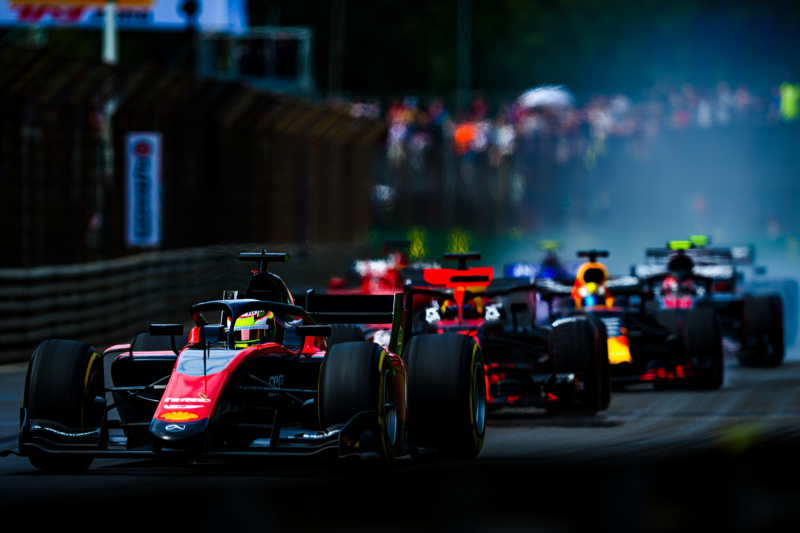
In Formula 1, every second counts—not just on the straights and corners, but also during critical moments like Safety Car restarts. Mastering restart tactics and tire energy management can dramatically shift race outcomes, giving teams and drivers a competitive edge. At YourStop F1, our goal is to distill complex data—whether telemetry signals, tire behavior, or strategic patterns—into actionable insights that elevate your understanding of race dynamics. This article dives deep into proven Safety Car restart strategies and tire energy tricks to help you achieve better race results.
The Importance of Safety Car Restarts in F1
Safety Car periods are unpredictable but inevitable. They neutralize race pace, bunch up the field, and open strategic doors. The restart, however, is a high-stakes phase where milliseconds and decision-making can determine victory or defeat.
Why Focus on Restart Tactics?
- Position Gain or Loss: The ability to accelerate aggressively at the restart can boost your position.
- Energy Management: Drivers must judiciously use their battery systems and tire energy to maximize acceleration without compromising grip.
- Strategic Uncertainty: Teams need to decide the optimal timing and approach for the restart to gain an advantage.
The Impact on Race Outcome
Effective restart tactics can:
- Allow an overtaking surge
- Minimize time lost during the neutral period
- Exploit opponents’ mistakes or slow reactions
Mastering Safety Car Restart Tactics
Common Restart Strategies in F1
| Strategy | Description | Best Used When |
| Lag-and-Go | The driver waits slightly after the leading car accelerates, gaining tactical advantage by timing the launch perfectly. | When behind a similar or faster competitor |
| Reaction-First | The driver attempts to launch immediately as the safety car is cut in, aiming to get ahead early. | When the leader is slow to react or unevenly paced |
| Smooth and Steady | Gentle acceleration with focus on tire grip preservation, often used on mixed or tricky surfaces. | When track conditions are uncertain or tires are cold |
Factors Influencing Restart Success
- Timing of the Safety Car In: When to anticipate the cut-in point.
- Track Conditions: Wet surfaces or low grip zones demand different tactics.
- Tire and Fuel State: Cooler tires and fuel loads affect acceleration dynamics.
- Driver Reactions and Communication: Precision and coordination with race engineers are vital.
Tire Energy Management for Optimal Restart Performance
Understanding Tire Energy in F1
F1 tires behave as energy storage systems that influence grip, speed, and durability. Effective management prevents premature degradation and maximizes performance during pivotal phases like restarts.
Key Techniques for Tire Energy Optimization
1. Pre-Restart Tire Warm-up
- Gentle throttle application to raise temperature gradually
- Avoiding overheating or uneven wear
- Use of controlled tire heating systems when applicable
2. Balancing Tire Grip and Energy Release
- Applying throttle in a controlled manner to prevent spin
- Managing slip angles to maintain grip without excessive energy loss
- Adjusting driving style based on tire degradation levels
3. Adapting to Weather and Track Conditions
- Cooler ambient temperatures require more conservative throttle use
- Wet or slippery surfaces demand cautious acceleration to preserve tire energy
The Role of Hybrid Systems in Energy Management
Most modern F1 cars feature hybrid ERS (Energy Recovery Systems). Strategic deployment of electrical energy during restarts can:
- Boost acceleration instantly
- Help outmaneuver opponents
- Minimize tire slip and wear
Combining Restart and Tire Strategies for Race Success
Tactical Integration
| Step | Action | Purpose |
| Preparation | Monitor tire temperature and degradation data pre-restart | Ensure tires are in optimal window for quick gain |
| Timing | Decide the exact moment to accelerate based on telemetry signals | Maximize advantage at the restart |
| Execution | Use hybrid boost and throttle control to optimize energy release | Achieve maximum acceleration with minimal tire slip |
| Post-Restart | Adjust driving style to preserve tire energy and maintain optimal grip | Sustain performance for the remainder of the stint |
Practical Insights from Race Data
- Successful teams often delay initial acceleration slightly to improve tire grip.
- Consistent telemetry analysis shows that strategic electric energy deployment can lead to overtakes.
- Tire temperature peaks correlate with optimal grip zones, guiding drivers when to push or conserve.
FAQs About Safety Car Restarts and Tire Energy Management
How do I know the best moment to accelerate during a safety car restart?
Expert analysis indicates that timing depends on track conditions, tire temperature, and opponent behavior. Telemetry data suggests watching for a specific temperature threshold—generally around 85-90°C for optimal grip—before launching.
Can tire energy management really make a difference in my race performance?
Absolutely. Proper management not only prolongs tire life but also enhances acceleration and handling during restarts and critical phases. Harnessing hybrid energy systems effectively can provide that crucial edge.
What are common pitfalls to avoid during restarts?
- Too aggressive launching causing tire slip and degradation
- Delayed reactions missing optimal launch timing
- Poor energy deployment leading to underwhelming acceleration
Mastering Safety Car restart tactics combined with intelligent tire energy management transforms a good driver into a race winner. By integrating telemetry insights, weather considerations, and strategic energy deployment, teams and analysts can craft smarter, more effective race strategies.
At YourStop F1, we decode the complexities of Formula 1—turning raw data into clear, actionable strategies that drive success. Whether you’re a fan, analyst, or team member, understanding these tactics enables you to anticipate and adapt, leading to better race results and a deeper appreciation of F1 as a high-precision engineering competition.
Ready to harness the power of data-driven strategies in your racing insights?
Stay tuned with YourStop F1 for in-depth analysis, expert tactics, and actionable intelligence to give you the edge—all season long.