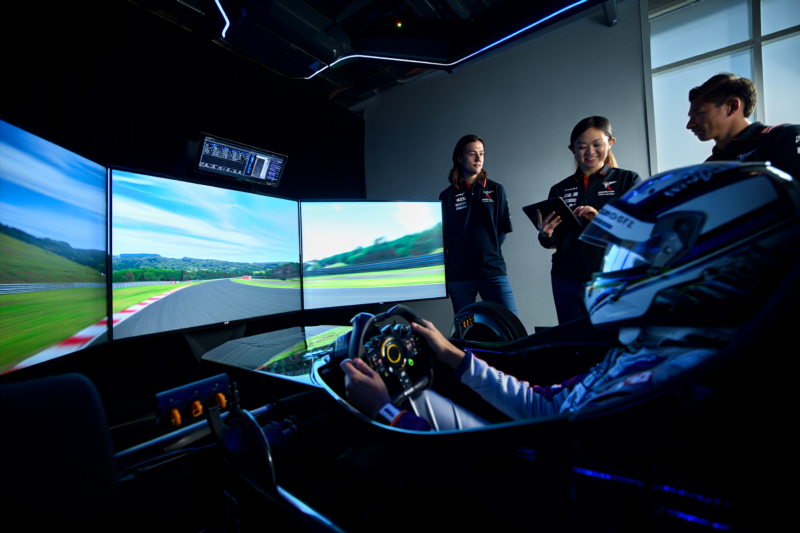
Unlocking the Power of Advanced F1 Simulators in 2025
In the fast-paced world of Formula 1, teams continually seek cutting-edge tools to push the boundaries of engineering excellence and driver performance. One such revolutionary tool is the F1 simulator — a hyper-realistic platform that allows teams to design, test, and refine strategies in a virtual environment before executing them on track. In 2025, the role of simulators has evolved beyond basic practice runs to become an integral component of race preparation, offering insights that directly influence real-world performance.
The Evolution of F1 Simulators: From Basic Setups to Race Rehearsals
Basic Setups: The Foundation of Simulator Use
Traditionally, F1 simulators were primarily used for familiarization. Teams would use them to:
- Understand new tracks
- Practice driving lines
- Test basic car configurations
These sessions allowed drivers to gain confidence before hitting the track, reducing time spent learning complex circuit layouts.
Advanced Data Integration: Tailoring Performance
By 2025, simulators have become highly sophisticated, integrating real-time telemetry data, tire behavior models, and environmental conditions such as weather influence and track temperature. This level of detail enables teams to:
- Fine-tune car setups for optimal balance
- Simulate qualifying runs with high precision
- Anticipate how upgrades will perform under varying conditions
Race Rehearsals: The Pinnacle of Simulator Usage
The most significant leap in 2025 is the adoption of *race rehearsal* scenarios, where teams run full simulations mimicking upcoming Grand Prix conditions. These sessions help teams to:
- Develop and test pitstop strategies
- Practice overtakes in realistic traffic conditions
- Experiment with tire wear and degradation
These rehearsals are akin to the “dress rehearsal” concept, allowing teams to identify potential issues well before race day, giving them a competitive edge.
How Teams Leverage Simulators for Performance Enhancement
Strategy Development and Refinement
Simulators serve as a control tower for strategic analysis. Teams utilize them to:
- Analyze different tire compounds under simulated race conditions
- Optimize pitstop sequences based on simulated weather shifts
- Test the impact of regulation changes on performance
Driver Preparation and Skill Enhancement
For drivers, simulators are invaluable for:
- Practicing challenging corners and complex sections
- Improving consistency across high-fidelity race scenarios
- Enhancing mental focus and reaction times in a risk-free environment
Testing Upgrades and Innovations
In 2025, teams can virtually implement upgrades — such as aerodynamic tweaks or powertrain improvements — and immediately assess their impact. This approach:
- Accelerates innovation cycles
- Reduces costs associated with physical testing
- Ensures upgrades deliver tangible performance gains
Benefits of Simulators in 2025 F1
| Benefit | Description |
| Cost-Effectiveness | Virtual testing reduces the need for costly physical prototypes and track testing. |
| Time Efficiency | Rapid iteration of strategies and setups within a controlled environment. |
| Risk Reduction | Minimize errors during actual races by pre-emptively addressing potential issues. |
| Enhanced Data Insights | Integration of telemetry and environmental data for smarter decision-making. |
Frequently Asked Questions
How realistic are F1 simulators compared to actual racing conditions?
Modern F1 simulators in 2025 are incredibly realistic, employing physics engines that replicate car behavior, tire dynamics, and environmental factors. Many drivers and engineers consider them almost indistinguishable from actual track experiences, making them a critical part of the strategic toolkit.
Can simulator data accurately predict race outcomes?
While simulations provide valuable insights, they are one piece of a larger puzzle. Factors such as driver psychology, unforeseen weather changes, and on-the-fly team decisions still influence race results. However, simulators significantly improve preparedness and decision-making accuracy.
How do teams ensure their simulator setups stay updated with the latest regulations and upgrades?
Teams maintain dedicated simulation teams that continuously update parameters based on real-world data, recent upgrades, and regulation changes. This dynamic approach ensures the virtual environment remains aligned with the latest race conditions.
In 2025, F1 teams leverage simulators far beyond simple practice tools — they are strategic platforms vital for race success. By transitioning from basic setups to comprehensive race rehearsals, teams enhance their training success, optimize strategies, and accelerate innovation cycles. For fans and analysts following the evolving landscape of Formula 1, understanding the pivotal role of simulators offers deeper insight into how engineering decisions, human performance, and race strategy converge to craft the science of speed.
Discover more about how innovative simulation strategies influence every aspect of F1 with YourStop F1 — your ultimate guide to race analysis, driver insights, and technical deep dives.